Apple’s upcoming iOS 26.2 update is set to become one of the most consequential software pushes in recent years. Reports indicate that millions of iPhone users running iOS 18 or older will be required to upgrade due to critical security revisions, new app standards, and deeper ecosystem functionality. While mass upgrades often spark debate, this moment also offers an opportunity to reflect on the iPhone’s unparalleled journey—from its 2007 debut to its present dominance—and understand why it remains the defining device for this generation.
The Complete History of the iPhone (2007–2025)
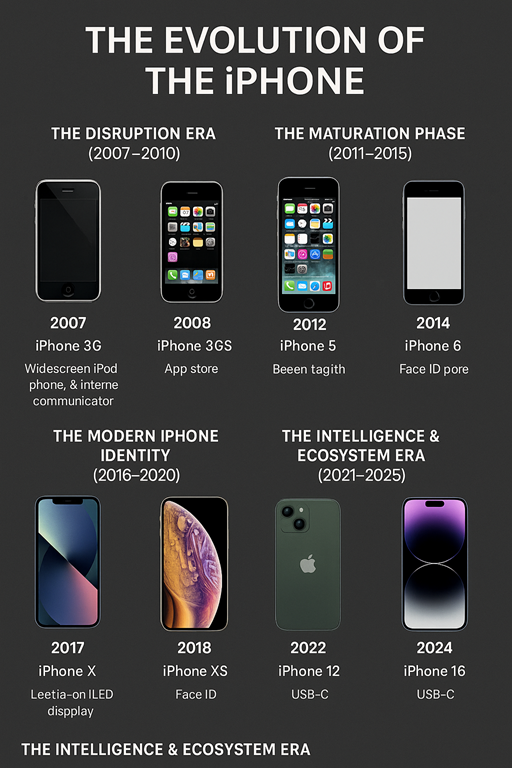
1. The Birth of a Revolution (2007–2010) The iPhone arrived in 2007, introduced by Steve Jobs as three devices in one. It replaced physical keyboards with multi-touch input, setting the architecture for modern smartphones. The App Store, launched in 2008, gave birth to an entire digital economy, transforming the iPhone from a gadget into a global platform. The 3G and 3GS models popularised mobile internet and performance-centric design.
2. The Growth and Maturity Phase (2011–2015) With the iPhone 4S, Apple introduced Siri—ushering in voice assistants. The Retina Display, LTE support, better cameras, and more powerful processors refined user expectations. The iPhone 6 and 6 Plus era saw record-breaking sales as Apple entered the large-screen market, setting new global industry benchmarks.
3. The Modern Identity (2016–2020) The iPhone X (2017) marked a major evolutionary leap: Face ID, edge-to-edge OLED, gesture navigation, and removal of the home button. Apple began pushing bold industry trends such as the removal of the headphone jack and advancing computational photography. Apple Silicon’s A-series chips became the best mobile processors in the world.
4. The Intelligence & Ecosystem Era (2021–2025) iPhones became deeply AI-enhanced, introducing satellite emergency SOS, ProRes video, and tight integration with Apple Watch, Mac, HomePod, and VisionOS devices. iOS versions focused on privacy, on-device intelligence, sustainability, and interoperability. The transition from Lightning to USB-C aligned with global regulations.
Why iOS 26.2 matters right now are because Apple’s upcoming iOS 26.2 update is more than a routine patch it represents a major compliance and security shift.
• Mandatory Security Architecture Upgrade- New zero-day vulnerability protections require newer system frameworks not supported on iOS 18.
• Updated App Store Compatibility- Most modern apps now require iOS 20+, making older versions obsolete for banking, social media, and productivity tools.
• Enhanced Artificial Intelligence Engine- On-device intelligence and generative features need updated neural processing capabilities.
• Privacy Compliance with Global Laws- iOS 26.2 aligns with EU Digital Markets Act, US privacy reforms, and India’s DPDP Act necessitating mandatory updates.
• Advanced Ecosystem Syncing- Newer Macs, Apple Watch models, Home Pod updates, and Vision Pro integrations require updated iPhone software. Millions of users will therefore need to update to remain secure, compatible, and connected.
Why the iPhone Is the Best Smartphone for This Generation
1. Longest Software Support in the Industry- iPhones receive 6–7 years of major updates, compared to Android’s 3–4 years for most devices. Older iPhones function smoothly much longer, offering unmatched longevity.
2. Apple Silicon: The Most Powerful Mobile Chips- A-series chips deliver superior performance, battery efficiency, and long-term stability. No Android manufacturer matches Apple’s chip lifecycle reliability.
3. Privacy-Centric Design- Apple pioneered: App Tracking Transparency, Lockdown Mode, End-to-End encrypted iCloud backups and On-device processing for AI. In an era of data misuse, this is crucial for modern users.
4. Seamless Ecosystem Integration- The iPhone acts as the center of Apple’s tightly-knit ecosystem: AirDrop, iMessage, Continuity & Handoff, Universal Clipboard, Apple Watch pairing and Vision Pro integration. No other brand provides such effortless cross-device experience.
5. Superior App Quality- Developers optimise first for iOS due to predictable hardware and high-spending users. Apps look better, run smoother, and stay updated longer.
6. Best-in-Class Photography & Videography- From Dolby Vision HDR video to ProRAW and ProRes formats, iPhones are unmatched for content creators. Social media apps optimise camera processing for iPhones first.
7. Higher Resale Value- iPhones retain up to 60% of their value after years of use far more than Samsung, Pixel, or Chinese Android brands.
8. Stability, Reliability, and User Experience- With minimal bloatware, a polished UI, and deep software-hardware integration, iPhones remain incredibly stable. This appeals especially to younger generations seeking simplicity and consistency.
The iPhone’s Legacy Continues till now because the rollout of iOS 26.2 is not just another update; it is a continuation of the iPhone’s evolutionary path. From its disruptive introduction in 2007 to its present status as the pinnacle of personal technology, the iPhone has shaped how billions communicate, work, learn, and create.
In an era where digital identity, privacy, AI, and global connectivity define daily life, the iPhone stands unmatched not only as a smartphone but as the most complete personal computing device of this generation.