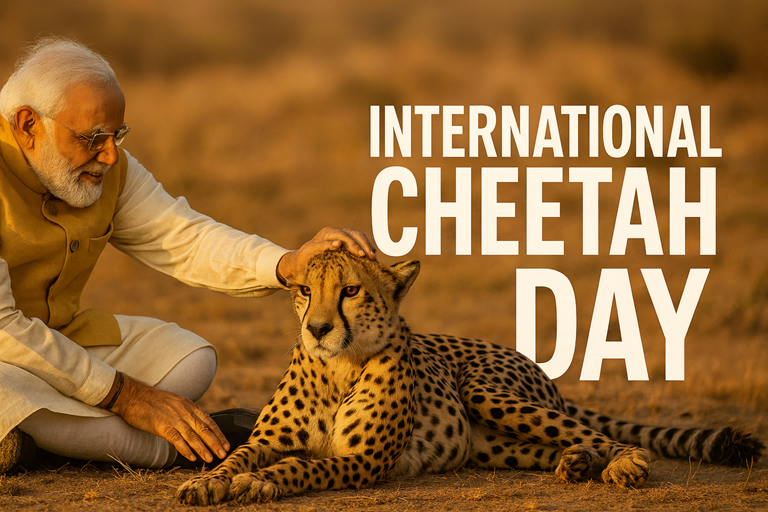
Every International Cheetah Day is symbolic. But this year’s observance holds deeper meaning for India a nation that lost the cheetah to extinction in the mid-20th century and is now attempting one of the most ambitious wildlife reintroduction programmes in modern conservation. Prime Minister Narendra Modi’s message on Thursday, accompanied by striking images of the animal, serves not just as a celebration of progress but also as a reminder of the responsibility that lies ahead.
Launched three years ago, Project Cheetah aimed to reverse an ecological loss that once seemed irreversible. India’s decision to reintroduce the species from Namibia and South Africa was more than a symbolic gesture; it was a restoration of a missing link in its grassland ecosystems. With 32 cheetahs now in the country 21 born on Indian soil the project is no longer an experiment, but a living, breathing conservation success story in the making.
The birth of five healthy cubs to Mukhi, an India-born female cheetah, marks a quiet milestone. For the first time in decades, cheetahs are breeding naturally on Indian land. Such moments validate the patience, planning, and scientific diligence behind the project.
The Prime Minister’s recognition of Cheetah Mitras, local volunteers trained to support monitoring and community awareness highlights a crucial truth: wildlife conservation cannot succeed without people. Their involvement underscores India’s long civilisational ethos of coexistence with nature. For a species known for conflict-free behaviour, ensuring safe habitats and enlightened communities is central to long-term survival.
That cheetah tourism is growing in Kuno and Gandhi Sagar is encouraging, but it also brings new responsibilities. Tourism must be carefully regulated to avoid stress on the species, particularly young cubs and lactating mothers. If managed responsibly, it can become a sustainable tool for both conservation funding and community development.
The Prime Minister’s invitation to global wildlife lovers reflects confidence in the project. Yet, this invitation also carries the obligation to maintain scientific rigour, strengthen habitat corridors, and expand monitoring capacities.
Reintroducing the cheetah remains a delicate task. The species is vulnerable, sensitive to territorial change, and dependent on prey availability. While India has made commendable gains, the risks ranging from disease to inter-species conflict persist. Long-term success will require continued habitat management, adaptive conservation strategies, and the political and social will to invest in ecological restoration.
International Cheetah Day is therefore not merely a celebration it is a checkpoint. A reminder that India’s conservation journey is far from over, but on the right path.
With each new cub born on Indian soil, India comes closer to correcting a historical ecological loss. The challenge now is to ensure that the cheetah does not simply return but that it stays.